
Digital resilience in wartime: what Europe can learn from Ukraine

Ukraine is showing the world how digital transformation is not just a strategic choice, but a lifeline in times of crisis. As the country fights for its existence, it has deployed digital solutions with remarkable speed and innovative power to keep the government, economy and society running.

From e-government and blockchain to cybersecurity and citizen participation, Ukraine demonstrates that digital maturity is not a luxury but a necessity, even, or especially, in times of war. Europe would do well to study and apply these lessons, because digital agility is no longer an option but a requirement for resilience in an unpredictable world.
Digital transformation under fire: a conversation with Dmytro Khutkyy
For my new book, Strategy in Digital Transformation, I felt it was essential to interview someone with a direct connection to digital transformation. On LinkedIn, I saw how Dmytro Khutkyy reports on this transformation in his native country from Estonia.
Erik: What is your research about?

Dmytro: My research is about digital democracy in general and specifically in Ukraine. While studying sociology in Ukraine, several events inspired me to specialise in digital democracy.
I’m referring to the Euromaidan revolution in 2013, the annexation of Crimea in 2014 and the full-scale Russian invasion of Ukraine since 2022. These events have significantly shaped Ukraine's political landscape and the role of citizens who shaped an e-democracy movement. At the University of Tartu we research these developments further.
Erik: What is digital democracy?
Dmytro: For me, digital democracy is about citizens actively participating with each other and their government using digital means. Together they participate in activities that help their society. For instance, in Ukraine citizens use social media to record Russian war crimes or use digital apps to keep in touch and support displaced Ukrainians both inside and outside Ukraine. People unite digitally, and we want to keep this momentum.
Erik: How successful is Ukraine’s digital transformation?
Dmytro: Very successful, even under these difficult circumstances. In just a few years, the Ukrainian government moved from web-based digital services to fully mobile services. Ukraine is quite advanced in e-health and other digital government services. In the United Nations E-Government Survey 2025 (data as of 2024) it ranked 5th in the online services index and 1st in the UN e-participation index.
Erik: What is Ukrainian’s strategy behind this digital transformation?
Dmytro: With a war ravaging the country’s infrastructure, displacing its people and eating up our already limited resources the Ukrainian government has to look for alternatives to give its citizens a future. I think ‘resilience’ is the best term for what we see happening in both the Ukrainian government and its citizens. We have many highly educated people who speak several languages and are digital savvy. They feel the need for change and to bring hope for everybody. Ukraine’s strategy is to deliver the best and fastest digital services to its citizens, to showcase its digital innovations and to gain acknowledgment for this from the world. The circumstances are literally disruptive, but we find resilience to turn this into a unique opportunity.
Erik: What is the Ukrainian government doing with artificial intelligence?
Dmytro: The Ukrainian government uses generative AI for example to analyse Russian disinformation and measure sentiments on social media. There are many AI based initiatives and their number will just increase over time.
Erik: What else would you like to share?
Dmytro: At the University of Tartu we developed an online course about the contemporary Ukraine. It’s free for all and it talks about the current digital developments in this country, including digital ones. I invite everybody with an interest in digital government and digital democracy to follow this course and share experiences.
Invest in digital resilience now
Ukraine's digital breakthroughs show that transformation is possible, even in the darkest of times. For Europe, the message is clear: invest now in digital resilience, because the next crisis is always just around the corner. The question is not if, but when you will be ready.
Anyone who reads the US government's recently published National Security Strategy understands that Europe is pretty much on its own. This is not the time to complain and be indignant. This is the time to develop a European (digital) strategy that will quickly prepare us for the significant changes ahead.
'Strategy in digital transformation' book
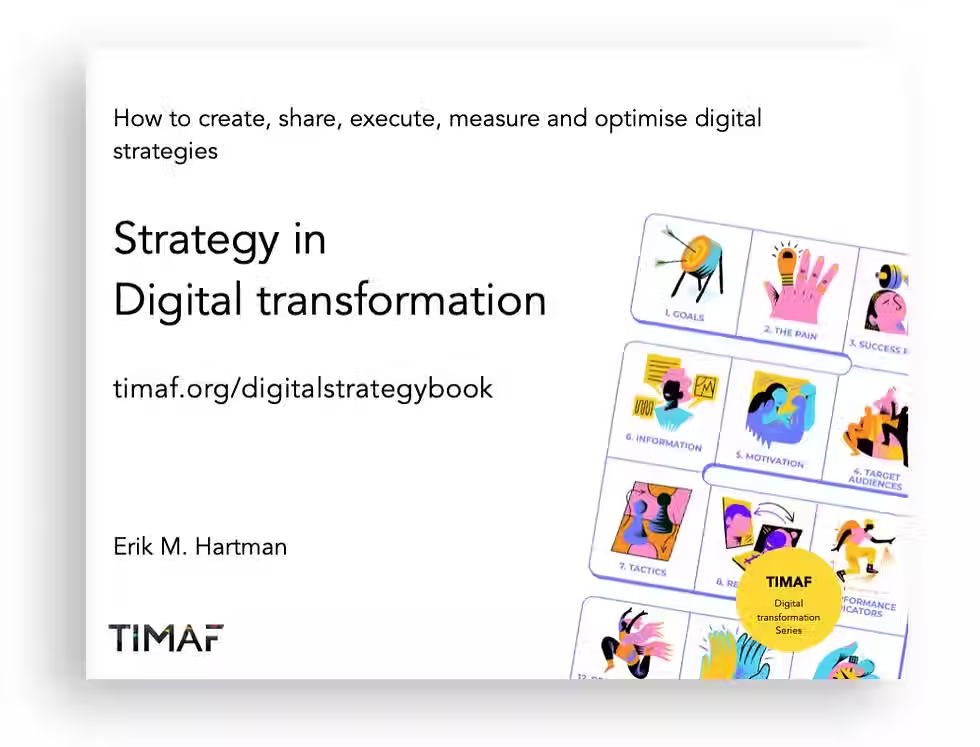
The TIMAF book Strategy in Digital Transformation contains more interviews with professionals in digital transformation. The book delves deeper into the nuances of digital transformation and offers practical advice on how to navigate the complexity of the digital landscape.
Practical case studies and practical tools to help you develop and implement a successful digital strategy. Whether you are a seasoned professional or just starting your digital journey, the book offers insights tailored to your needs.


Comments